September 18, 2026 · Updated September 19, 2026 · 4 min read
A night in class: what a 6 to 9 PM session actually looks like
An illustrative evening of skills practice, how online lessons support class, and how to plan for the separate externship commitment.
By Garrett Greer, owner and director
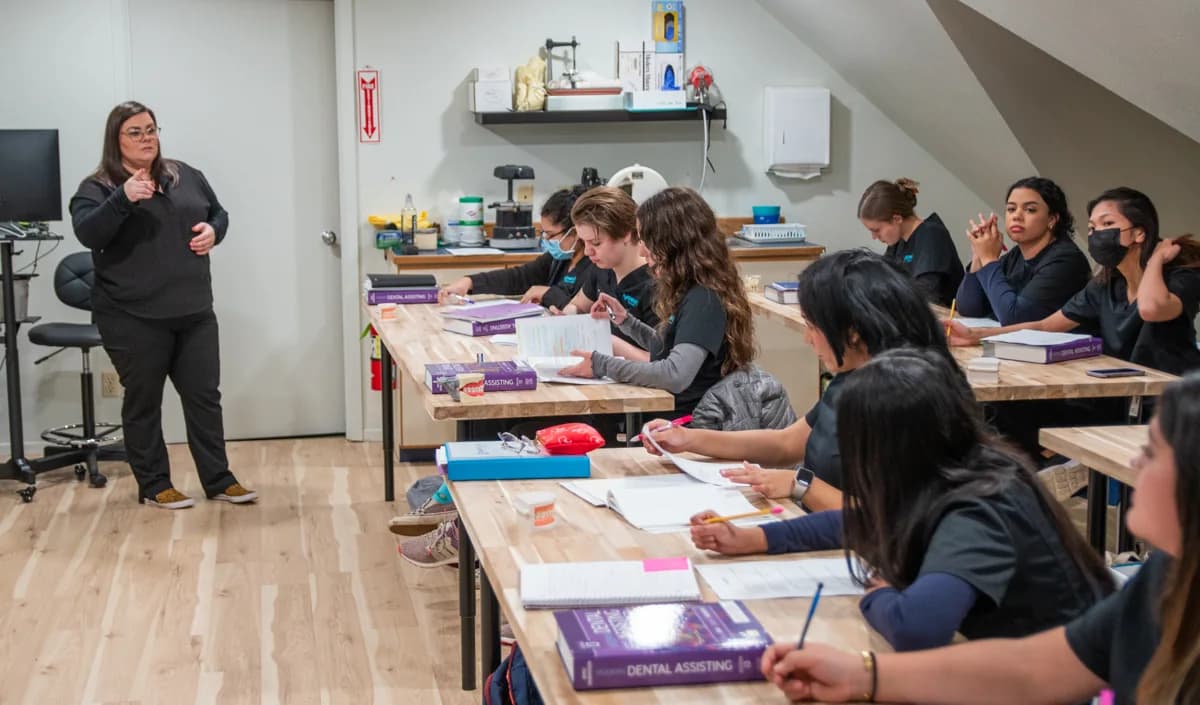
Prospective students ask what “two evenings a week in a working dental office” means in practice, so here is an illustrative class-night outline. Activities, timing and skills checks vary by module and instructor; this is not an attendance or make-up policy.
5:45 PM: arrive
The last patient of the day has left and the operatories have been turned over. Students arrive in scrubs, drop bags in the staff room, and check the board for the night’s stations. Most people come straight from work; a few eat in the car.
6:00 PM: quick review
The instructor spends ten or fifteen minutes on the week’s online lesson, which everyone has watched beforehand. Questions get answered here, not in a lecture. Then the group splits across the operatories.
6:15 to 7:30 PM: hands-on stations
Small groups rotate through the night’s skills at real chairs with real equipment. Early in the program that means operatory setup and breakdown, instrument identification and passing, suction and retraction on each other. Later it means alginate impressions and pouring models, rubber dam placement on typodonts, radiography positioning with the beam off, sterilization runs, and four-handed assisting with an instructor playing dentist.
7:30 PM: ten minutes
A short break. Instructors use it to give individual feedback on the impressions or images from the first rotation.
7:40 to 8:50 PM: second rotation and skills check
Groups switch stations. Most nights end with a skills check: each student demonstrates the week’s procedure while an instructor watches and signs the competency sheet. Students who need another attempt get it the following night.
8:50 PM: turnover
Students break down and disinfect their operatories exactly as they would after a patient, run the sterilizer, and restock. It is part of the training, not a chore added to it. Doors close at nine.
Between classes
Online lessons need their own study time. The 80-hour externship is scheduled with the host office and may require daytime availability. Ask admissions about expected weekly study, externship timing and the attendance policy before committing to a work schedule.
Common questions
Do I practice on real patients in class?
In class you practice on classmates, typodonts and models. You work with real patients during your 80-hour externship in a partner office, under supervision.
What if I miss a class night?
Tell your instructor as early as you can. Ask about the attendance and make-up requirements in the program catalog; do not assume every missed session can be rescheduled.