
September 19, 2026 · 4 min read
What do dental assistants do all day? A practical look at the work
Explore the preparation, patient support, teamwork, and follow-through in a dental assistant's day, with questions to ask before choosing the career.
By Accelerated Assisting, career guides team
Before the first appointment
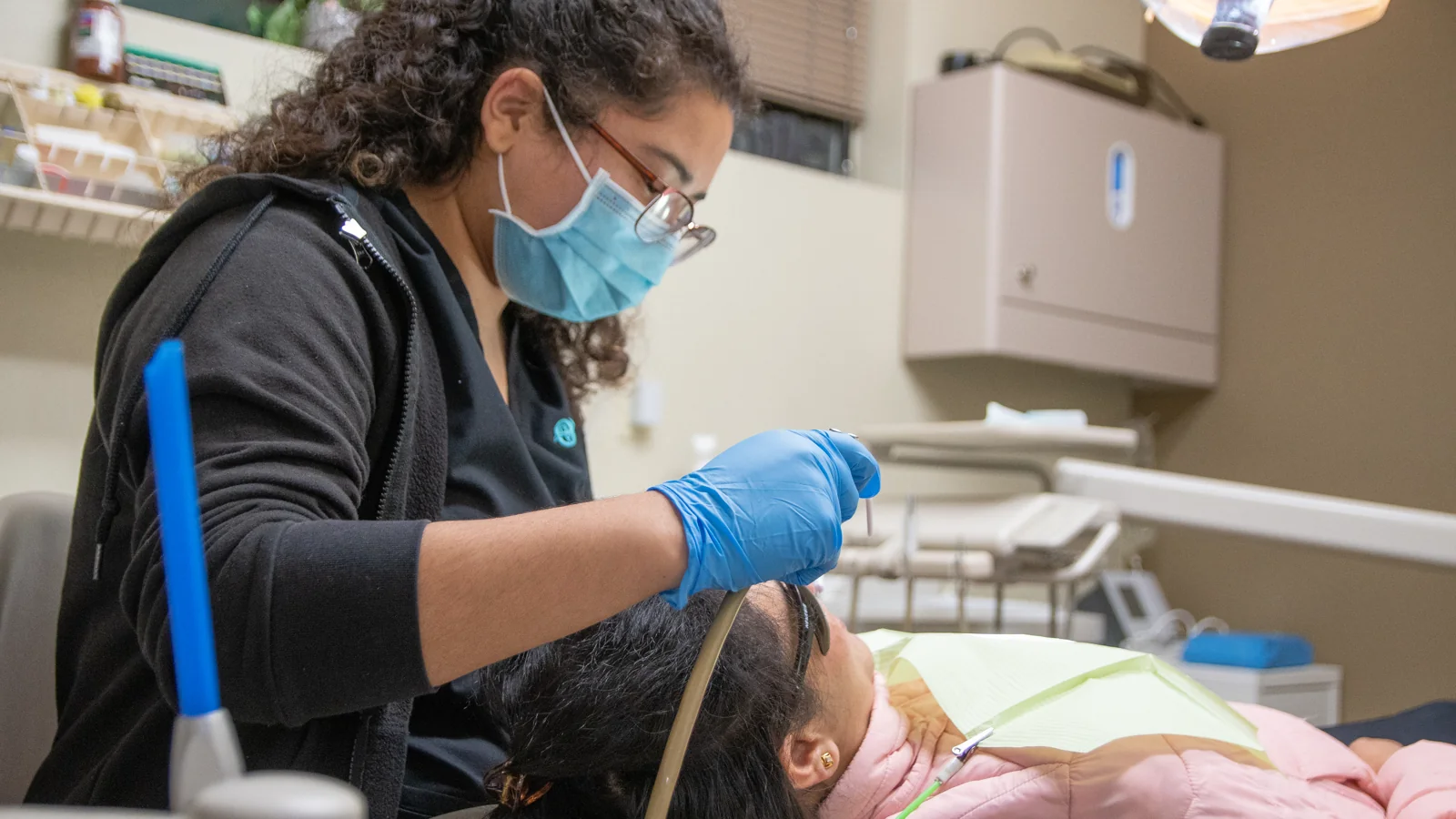
An assistant's work can begin with checking the day's plan, preparing treatment areas and supplies, and coordinating with the team. The useful question is not only what time the first patient arrives, but what time employees are expected to be ready and how opening tasks are assigned.
Imagine discovering that something needed for a later appointment is missing. The lesson for a beginner is to flag the issue early and ask who should resolve it. Learning how the office communicates can be as important as learning where supplies are stored.
During an appointment
BLS describes assistants working with patients and dentists, preparing equipment, and helping during treatment. What you personally do depends on training, supervision, the appointment, and state requirements. A list of national job duties is not permission to perform every listed task in Oregon.
From a career-planning perspective, notice the combination of listening and action. You may need to follow a clinician's direction, stay aware of the patient, and keep track of the next step. Ask a prospective office how new employees learn its routines without being expected to anticipate everything immediately.
Between appointments
Instrument processing, treatment-area preparation, documentation, and supply management are part of keeping care moving. These are tasks to learn through supervised instruction and approved procedures, not from a career article. Follow the office's validated processes, applicable requirements, and manufacturer instructions.
Ask how the team divides turnaround work and what happens when one appointment runs late. A clear answer tells you more about the job than a promise that every day is fast paced. Find out whether beginners have a designated person to ask when instructions are unclear.
A sample sequence, without pretending every day is the same
The sequence below is an example for understanding the rhythm of the work. It does not describe the schedule, staffing, or procedures at any particular practice.
| Part of the day | What to pay attention to as a new assistant |
|---|---|
| Opening and team planning | Who assigns tasks, where the schedule is reviewed, and how changes are shared. |
| Patient appointments | Your assigned role, who supervises you, and when to ask for clarification. |
| Turnaround and preparation | The required process, enough time to complete it, and who can help. |
| Lunch and handoffs | How coverage works and whether the next person has the information they need. |
| Closing and follow-through | What must be finished today and what needs a clear handoff for tomorrow. |
How one office can differ from another
An assistant in general dentistry may work across a wider mix of appointment types; a specialty practice concentrates on a particular area of care. Job design still varies within each setting. Some positions include more administrative work, while others focus more heavily on clinical support.
Before accepting a position, ask for a description of the first month, not just a description of an experienced employee's day. Who will train you? How will progress be discussed? Which duties require a credential you have not yet earned? Those answers help you assess whether the role offers a realistic start.
Use a visit to answer your own questions
When a school or practice permits a visit, follow its privacy rules and ask before taking photos or notes. You are there to understand the environment, not to record patients or evaluate clinical treatment.
Choose two questions about the parts of the work that are hardest for you to picture. At a school, ask to see the learning space and hear how a beginner practices before entering an externship. Then compare what you learned with the kind of workday you want.